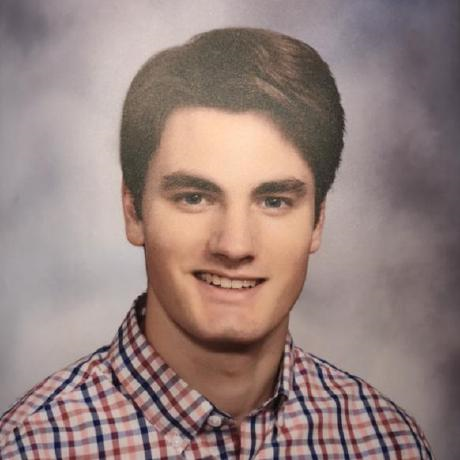
I’m Declan Kutscher, a Ph.D. student in Computer Science at the University of Maryland, College Park, advised by Ritwik Gupta.
I study how learning systems build useful representations of the world from unlabeled data and interaction. My work connects self-supervised learning, adaptive perception, and embodied agents, with applications in remote sensing and Earth observation.
Previously, I was a Research Assistant in Aran Nayebi’s NeuroAgents Lab at Carnegie Mellon University and a Research Engineer with Trevor Darrell’s group at UC Berkeley (BAIR) and
I completed my B.S. and M.S. in Computer Science at the University of Pittsburgh, working with Xiaowei Jia on machine learning for climate and environmental systems. My thesis examined self-supervised pretraining for remote sensing.
Away from research, I enjoy backpacking, film, music, and cats.
Selected research
EMNLP 2026 · Vision-language models
Tinted Frames: Question Framing Blinds Vision-Language Models
Can the way we ask a question change what a model sees? We show that semantically equivalent questions can shift a vision-language model’s attention away from relevant image regions. A lightweight prompt-tuning method helps restore visual grounding and consistency.
NeurIPS 2025 · Long-sequence vision
REOrdering Patches Improves Vision Models
The order in which a model reads an image matters. REOrder learns task-specific patch orderings for long-sequence vision models. It improves top-1 accuracy over row-major ordering by up to 3.01% on ImageNet-1K and 13.35% on Functional Map of the World.
Questions that guide my work
How can agents learn through exploration?
In NeuroAI, I study how intrinsic motivation and self-supervised reinforcement learning drive skill discovery in embodied agents. I examine whether these agents develop neural representations and behaviors similar to those observed in animals, with the broader aim of understanding how useful world models emerge from experience.
What changed: the world, or how we observed it?
Satellite imagery reflects both the physical world and the conditions of observation: sensing geometry, atmosphere, illumination, and sensor characteristics. I am interested in representations that distinguish changes on the ground from changes in imaging conditions, supporting more reliable Earth monitoring.